Part VIII · Camping Together
What Age Can You Start Camping With Kids?
Small Campers, Big Trips
How do you camp with kids?
Start younger than you think, go shorter than you want, and give every kid a real job: those three rules carry family camping from diapers to driver's licenses. The trip design is Chapter 2's template with kid modifications (closer, shorter, more snacks, earlier arrival), the gear is the adult system one notch warmer, and the secret nobody puts on the packing list is ownership: kids who run part of the camp love camping, and kids who get supervised through it are doing a chore outdoors.
The honest sales pitch, since this chapter is the book's most-asked question: camping is the highest-value family trip there is: cheap enough to repeat monthly, screen-free by geography rather than by argument, and built of exactly the materials (fire, water, dirt, tools, dark) that childhood is starving for. It's also real work with kids under five, which the ages-and-stages section respects instead of denying. The families who camp constantly aren't finding it effortless; they're running systems, and this chapter is the systems.
The scenario that frames everything: Saturday, 4 p.m., camp half-set. In one version, two adults work while two kids orbit, whine, and get shooed from the stove. In the other, the six-year-old is staking the tent's corners (her job, Chapter 31's easiest step), the nine-year-old is running the water jug and the firewood census (his), and the adults are twenty minutes from coffee. Same family. Different system. This chapter is the difference.
Ages and stages: the honest map
Babies (0–18 months): easier than reputation, honestly: they can't wander, they sleep anywhere they can sleep at home (pack-and-play in the big tent, dressed one layer warmer than you, never loose bedding), and their needs are portable. The work is logistics (diapers pack out like everything else; Chapter 35's rules apply) and temperature vigilance (babies can't shiver-warm or complain accurately; check necks, not hands). One-nighters close to home, per Chapter 2's template at its most conservative.
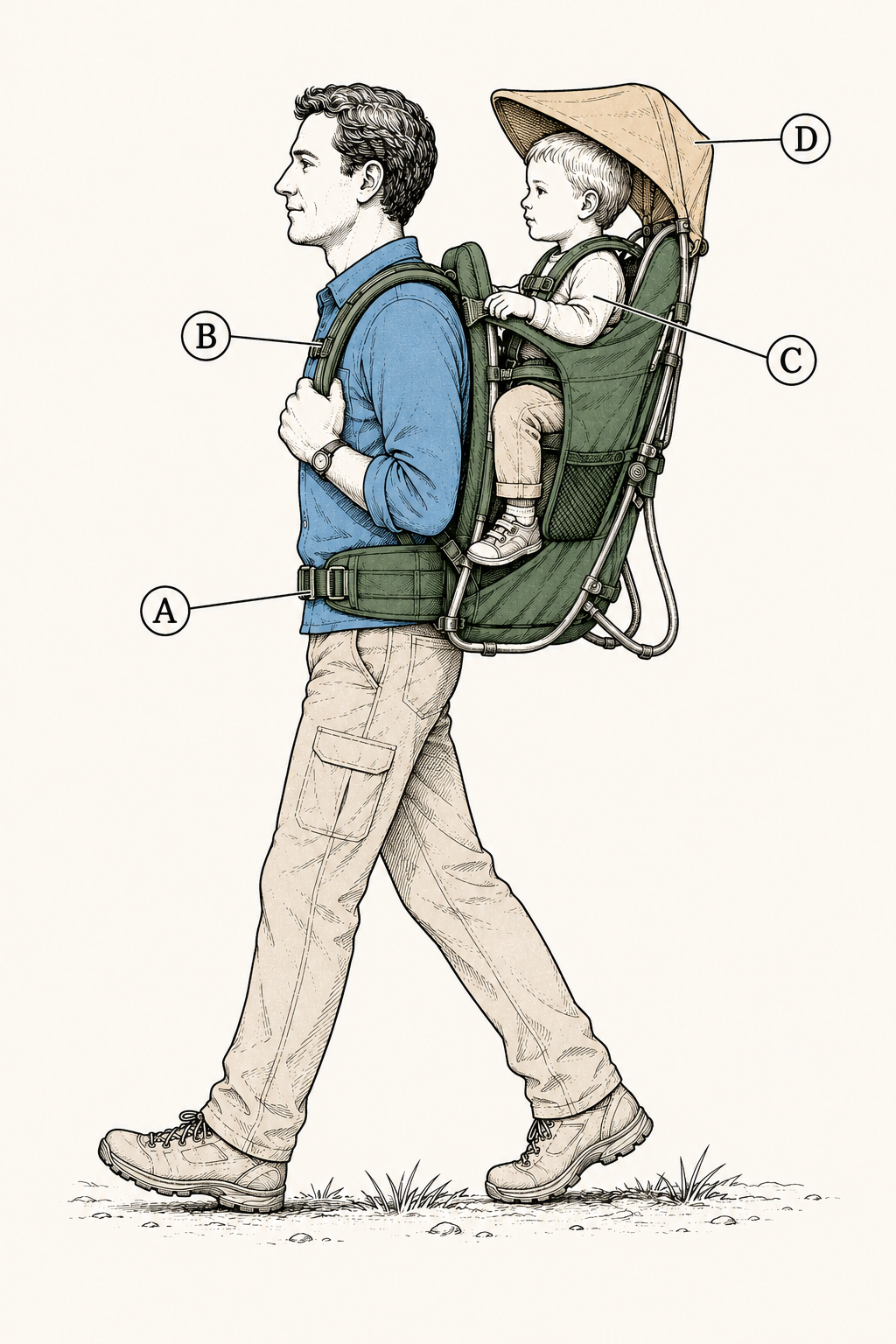
Toddlers (18 months–4 years): the supervision era: mobile, fearless, and magnetized to fire rings and water. Two-adult zone defense, the Chapter 33 perimeter established on arrival, and expectations resized: camp is the activity (a toddler will invest forty-five minutes in gravel), hikes are measured in hundreds of yards, and naps run the schedule. The child carrier extends range: fitted like a backpack (hipbelt doing the work, Chapter 11's machine with a passenger), kid's weight settled low, sun and temperature checked constantly because the passenger generates no heat from walking.
Preschool (4–6): the golden entry: old enough for jobs and rules, young enough for total enchantment. First real jobs (stake collection, stuff sacks per Chapter 37's board), first whistle-and-tree training (Chapter 50), first marshmallow license (Chapter 33), hikes to a half-mile-per-year-of-age with snack attractions.
Grade school (6–12): the payoff era: real hikers (Chapter 39's math at half rate, rising fast), real camp crew (fire tending, dishes, navigation games from Chapter 41), and the age where skills stick for life. Give them the headlamp, the pocketknife curriculum when ready (supervised, Chapter 15's rules), and escalating autonomy inside clear boundaries.
Teens (13+): the retention era: bring a friend (the single highest-impact move; a bored teen with a buddy is two happy campers), hand over real authority (they plan a dinner, own the fire, navigate a hike), and accept that the phone comes along (downloaded content, camera duty, and the honest observation that even teens surrender to a campfire eventually).
The first family trip: the template, modified
Chapter 2's design rules, kid-amended: one night, under 45 minutes from home (the bail radius matters more with kids; a 2 a.m. drive home is a defeat that should cost little), a campground with flush toilets and other kids (playgrounds and camp loops full of families are entertainment infrastructure), arrive by mid-afternoon (setup with daylight to burn, per the scenario above), and the backyard dry run first (Chapter 2's rehearsal, doubly mandatory: a kid who has slept in the tent twice treats the campground tent as home turf).
The expectation-setting that saves the trip: plan half of what seems reasonable, protect the unstructured hours (the best documented camping memories are unplanned: the frog, the stick fort, the gravel engineering), and set the trip's goal as "everyone wants to come back," not "we did things." A three-hour Saturday that ends with a kid asking when they can return beats a packed itinerary that ends in carried-to-the-car meltdowns.
And the two-family option deserves its billing: camping with another family halves the child-minding through pack dynamics (kids entertain each other), doubles the adult conversation, and converts dinner into Chapter 20's crowd formats. It's the single best difficulty modifier for the toddler years.
Kid gear: the short list that matters
The rules from earlier chapters, assembled: sleep systems one notch warmer than adults' (kids sleep colder and report later: synthetic bags per Chapter 9, pads mandatory per Chapter 10's physics, the hot-water-bottle trick at warm-not-boiling per Chapter 36), clothing doubled at socks and base layers (Chapter 6's law) in synthetics with self-serve zippers (Chapter 23), their own headlamp at age three-ish (Chapter 38: ownership plus red mode), their own small pack by preschool (carrying their water, snacks, and stuffed animal: identity gear, loaded to Chapter 11's 10–15% ceiling), the whistle on every daypack (Chapter 50's kid kit), and bright colors throughout (the earth-tone moratorium for under-twelves).
What not to buy: kid-branded gear gimmicks (the character sleeping bag rated for sleepovers, not shoulder seasons), anything sized to grow into (boots especially: Chapter 25's fit rules don't care about next year), and duplicate adult gadgets. The budget goes to the sleep system and footwear; everything else borrows, hands down, and thrifts, because they outgrow it mid-season anyway.
The job system: ownership makes campers
The principle, from Chapter 37's board, expanded to the whole trip: every kid owns named jobs matched to age, with real responsibility and one-look inspection. Setup jobs (the lie-down test from Chapter 30 is a legitimately useful kid job; corner staking; sleeping bag deployment), daily jobs (water jug status, firewood census, the handwash station monitor from Chapter 35, snack bin steward), and the aspirational ladder (fire tending rights, stove privileges, navigation lead on the day hike) that gives the whole enterprise a progression kids can feel.
Why it works, briefly, because the mechanism matters for running it: jobs convert kids from supervised cargo into crew, and crew status is what children actually want at camp (the whining orbit around the stove is a bid for involvement wearing an annoying costume). The inspection matters equally: a checked job is a job that mattered; silently redone work teaches that it didn't. And the jobs are theirs across trips: "you're stakes and pads" becomes an identity by trip three, which is exactly the point.
The teen version is authority rather than tasks: plan and cook Saturday dinner (budget included), own the fire start to hand-test finish, lead the navigation with the adults deliberately following. Handing over real control is the retention strategy, and it's also, quietly, how the next generation of trip leaders gets built.
Hiking with kids: halve the math, gamify the rest
The formula: Chapter 39's math at half speed with double snacks, a destination that's a noun (the lake, the bridge, the waterfall: kids hike to things, not through distances), and the turnaround rule enforced with extra rigor because carried-out kids weigh more every year. Rough capacity guide: a half mile per year of age for the under-eights, individual variation enormous, enthusiasm variation total.
The morale toolkit, field-tested by generations: snack attractions on schedule (Chapter 21's per-kid bags, deployed as destinations: "M&Ms at the big rock"), jobs on the move (the map-holder, the junction-caller, the wildlife-spotter with the Chapter 53 count), games that walk (I-spy, the alphabet hunt, twenty questions from Chapter 29's car list), the leader rotation (kids in front hike; kids behind get herded), and the emergency chocolate in the adult's pocket for the mile that breaks (Chapter 21 promised it never fails, and it never has).
The hard-won pacing truths: kids run in bursts and crash entirely (the adult conversational-pace doctrine doesn't apply; plan for sprint-rest cycles), whining peaks exactly one snack-interval before adults expect it (feed preemptively), and the carried toddler and hiking preschooler pace differently enough that two-adult groups should split by speed rather than march in one resentful column.
Food, sleep, and the transplanted routine
Food: the kid menu is Chapter 18's grid with morale weighting: familiar anchors (the pasta they eat at home) plus camp-only specials (foil packets they build, pie-iron anything, the s'mores institution), served early (camp dinner runs an hour before home dinner or pays in meltdowns), with the standing rule that campfire cooking counts as entertainment (a kid who built her own dinner packet eats her own dinner packet, vegetables included, a laundering of nutrition through ownership that works at a rate no home table achieves).
Sleep: transplant the home routine wholesale (same book, same order, same phrases: the cues carry across geography), add the camp layer (headlamp check, the staged night kit from Chapter 36, the explicit wake-us-if-cold license), expect the first night to run late and giggly (the first-night effect is doubled in bunk-party conditions; accept it, plan the next morning slow), and know the two real kid-night problems: cold (fixed by the one-notch-warmer rule plus checks: a cold kid may just go quiet) and the 2 a.m. bathroom trip (fixed by the headlamp at their shoulder, the shoes at the door, and for the under-fives, just taking them before you sleep).
The baby-and-toddler sleep footnote: naps are load-bearing (build the day around them, drive during them per Chapter 29), the tent runs hot in afternoon sun (Chapter 30's shade placement is a nap-enabler), and white noise is legal (the creek was the original sound machine anyway).
Rules, boundaries, and the safety net
The standing kid rules, set on arrival every trip, in kid language: the boundary (the dusk radius: which sites, which paths, always within voice), the buddy rule (sized to age: nobody solo past the boundary), the fire perimeter (Chapter 33's license system), the water rule (never at the water's edge without an adult, PFDs non-negotiable on and near real water per Chapter 57), the whistle rule (worn on hikes, three blasts means stop-and-answer, never cried wolf), and hug-a-tree (Chapter 50's protocol, drilled as a game yearly).
The adult-side net: the morning photo (today's outfit, per Chapter 50), zone defense assignments in camp ("you have the fire side, I have the water side"), the med card with weights and doses (Chapter 47), and the bail criteria written with kid multipliers: kids dehydrate faster (Chapter 49), chill faster (the one-notch rule again), and mask everything behind either stoicism or noise, which is why the buddy-watch doctrine from Chapter 49 applies to every family trip at full strength.
The freedom this buys is the actual point: clear boundaries and drilled protocols are what let kids roam, build, and disappear into the woods within the radius, which is the childhood the trip was for. The rules aren't the opposite of freedom; they're its price, paid once at arrival.
Trailhead Takeaways
- Three rules carry it all: start young, go short, give every kid a real job with a real inspection.
- Ages map honestly: babies are portable, toddlers are zone defense, preschool is the golden entry, grade school is the payoff, teens need a friend and real authority.
- First trip: Chapter 2's template at 45 minutes from home, flush toilets, other kids, backyard rehearsal first. Goal: everyone wants to return.
- Gear: sleep one notch warmer, synthetics, doubled socks, own headlamp and pack, bright colors, whistle. Budget to sleep and boots; borrow the rest.
- Hike at half math with snack attractions, noun destinations, and the emergency chocolate. Feed one interval before the whine.
- Dinner early, routine transplanted, first night giggly by design. Cold kids go quiet: check, don't ask.
- Boundary, buddy, fire perimeter, water rule, whistle, hug-a-tree: set on arrival, drilled as games, and freedom follows.
- Camp with another family. It halves the toddler years.
Where Trips Go Sideways
- The supervised-cargo trip. Two adults did everything while two kids were managed, shooed, and entertained at. Everyone came home tired and nobody asked to go back. The job board was the missing gear, and it weighs nothing.
- The itinerary. Six planned activities, zero gravel hours, and a family that experienced a schedule outdoors. The frog, the stick fort, and the favorite memory were all waiting in the unstructured afternoon that never happened.
- Adult math on kid legs. "It's only three miles" at Chapter 39 rates met a five-year-old at five-year-old rates, and the last mile was carried, heavily, uphill. Halve it, snack it, and hike to a noun.
- The quiet cold kid. She stopped complaining an hour ago, which got read as settling in rather than shutting down. Kids under-report exactly when it matters: the neck check and the one-notch rule exist because asking doesn't work.
- Dinner at 7:30. Home schedule, camp appetite, and the meltdown arrived at 6:15 on schedule, seasoning the whole evening. Camp dinner runs early. The s'mores can wait; the pasta can't.
Frequently asked
What age can you start camping with kids?
Any age: babies camp well (they can't wander and sleep anywhere they sleep at home), with temperature vigilance and one-layer-warmer dressing as the real work. The demanding stretch is toddlerhood's supervision era; the golden entry is four to six, when jobs, rules, and enchantment all land at once, and grade school is where the skills stick for life.
How do you keep kids entertained while camping?
Mostly by not trying: camp itself (fire, water, dirt, dark, other kids) is the entertainment, and unstructured hours produce the memories. Add the job system, one or two anchors (the noun-hike, foil-packet dinners they build, Chapter 52's games), and the campground's resident kid-pack does the rest.
How do you keep kids warm camping at night?
One notch warmer than the adults at every layer: synthetic bag at an honest rating, mandatory insulated pad, dry sleep set with beanie, and the warm (not boiling) water bottle in the footbox. Then check rather than ask: cold kids go quiet, and a hand on the neck reads truth.
What should kids do at the campsite?
Own jobs: staking corners, stuffing bags, running the water jug, monitoring the handwash station, tending the snack bin, earning fire privileges up Chapter 33's license ladder. Inspection makes the jobs real. Kids treated as crew love camp; kids treated as cargo review it accordingly.