Part IV · Dressing for Outside
Are Sun Hoodies Worth It?
Sun School
How do you protect yourself from sun while hiking?
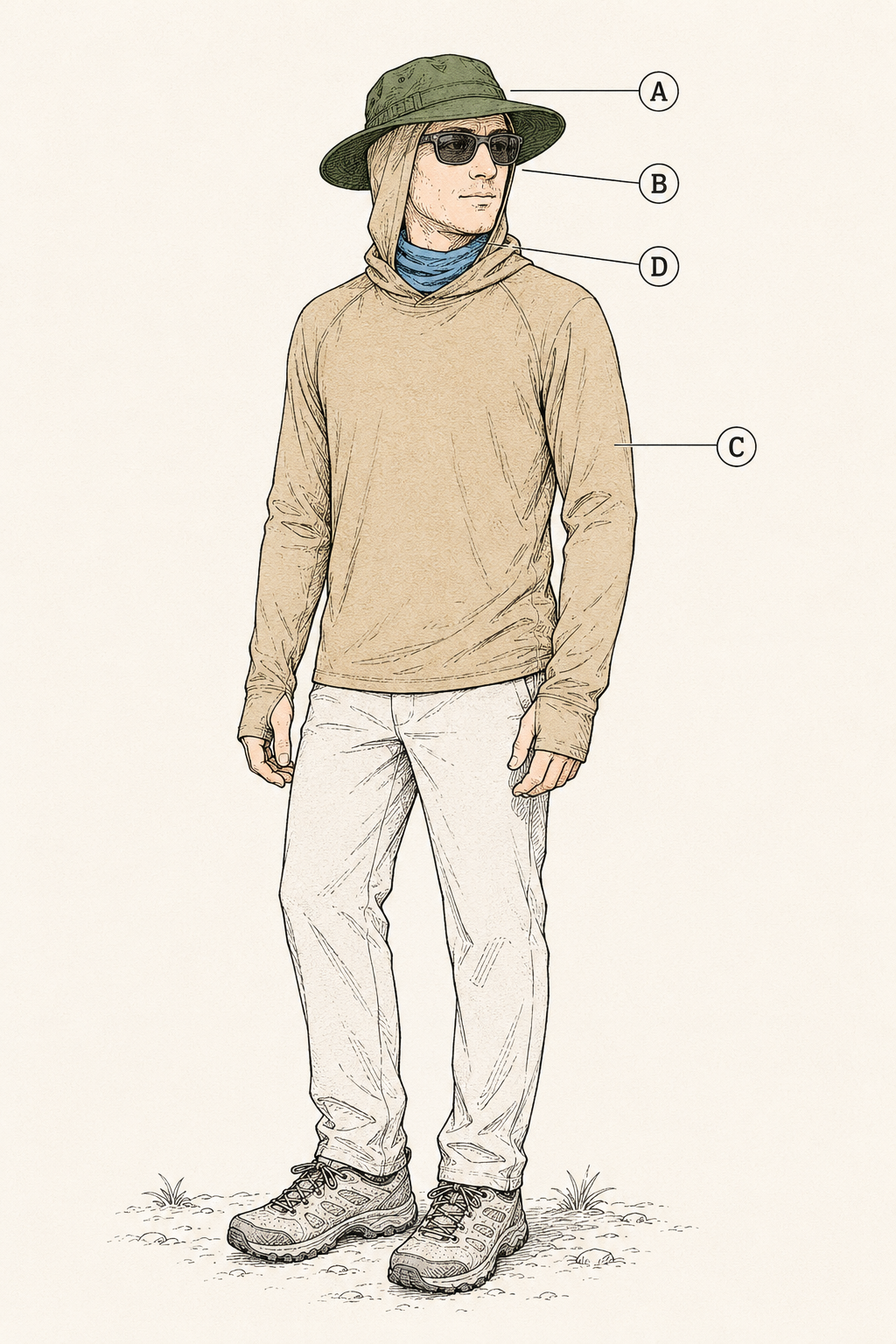
Cover first, cream second: a brimmed hat, a UPF sun hoodie or long sleeves, sunglasses, and a neck gaiter block UV all day without reapplication, and sunscreen (SPF 30+, broad spectrum, reapplied every two hours) covers what clothing can't. Campers who flip that order (cream as the primary, cover as backup) spend more, burn more, and reapply forever.
The cover-first argument is arithmetic: sunscreen works at the dose and schedule almost nobody follows (a full ounce per application for an adult body, every two hours, more when sweating), while a shirt works at the dose of "wearing a shirt." Fabric doesn't sweat off, doesn't miss spots, and doesn't run out Sunday morning. The modern sun hoodie (light, loose, hooded, rated UPF 50) turned this from dermatology advice into standard trail wear, and it belongs in the Chapter 23 wardrobe for any sunny climate.
Stakes, briefly and without the lecture: sunburn is the immediate misery (and a dehydration accelerant, per Chapter 49), and dose accumulates across a camping life. The protection is cheap, comfortable, and mostly a matter of getting dressed. School's short today.
UV, UPF, and where the sun hits harder
The UV index (in every weather app, per Chapter 4's forecast reading) says how fast unprotected skin burns: 3–5 moderate, 6–7 high, 8+ very high, plan around it like wind. Three multipliers campers forget: altitude (UV climbs several percent per 1,000 feet; the alpine lake at 10,000 feet delivers a stronger dose than the trailhead), reflection (snow bounces most UV back at you, water and sand meaningful fractions, which is how people burn under hat brims and up nostrils), and cloud cover's false comfort (thin overcast passes most UV; the gray-day burn is a genre).
UPF is clothing's SPF: a UPF 50 fabric passes 1/50th of UV. Rated garments guarantee it, but the honest secret is that most tightly woven, dark or bright, loose-fitting clothing performs well without a tag, and the hold-it-to-the-light test (see glowing skin through it? it's passing UV) beats marketing. Loose beats tight (stretched fabric opens its weave), dry beats soaked, and coverage beats everything: the hoodie's hood and thumb loops exist because ears, neck, and hand-backs are where hikers actually burn.
Sunscreen, used like it works
The label that matters: SPF 30 or higher (higher is marginally better, not multiples better), broad spectrum (UVA ages and penetrates, UVB burns; you want both blocked), water resistant 40 or 80 minutes for sweat. The technique that matters more: a real dose (a shot-glass ounce for a swimsuit body; a fat teaspoon for face, ears, neck), applied 15 minutes before exposure, reapplied every two hours and after heavy sweat or swimming, no exceptions for cloudy.
Mineral (zinc/titanium) versus chemical: both work; mineral suits sensitive skin, sits visible, and starts working immediately; chemical rubs invisible and wants its 15-minute head start. For camping logistics the answer is often both: a stick (mineral, pocket-sized, no spill, applies one-handed at the overlook) riding in the daypack per Chapter 12, and the bottle at camp in the car-door pocket per Chapter 6, where reachable means used.
Expiry is real (the SPF degrades; check the jar), and last-year's half bottle that lived in a hot car is weaker than its label. Cheap insurance: a fresh bottle each season, and the old one demoted to yard work.
The forgotten zones
Burns cluster where applications don't: ears (tops and backs), lips (SPF lip balm, reapplied like it's chapstick, because it is), the scalp's part line (hat, or sunscreen on the part), under the chin and nose (reflection off water and snow arrives from below; the boater's burn), the backs of hands (thumb loops or the stick), behind the knees (the swimmer's surprise), and the sandal-strap map of the camp-shoe foot.
The fix is a routine, not vigilance: morning application covers the list in order once (face, ears, lips, neck, hands, gaps), and the two-hour reapplication hits face-ears-lips-neck as a set. Partners check each other's backs and ears; solo campers own a mirror moment. Kids get the routine done to them at breakfast and after every swim, which Chapter 51 schedules so it isn't a negotiation each time.
Eyes: sunglasses are equipment
Sunglasses at camp are UV protection for tissue that doesn't tan, and the spec is simple: 100% UV (UV400) blocking, which drugstore glasses achieve fine; everything past that is optics and durability. Where they stop being optional and start being equipment: on water (glare doubles the dose and polarization earns its price by letting you see through the surface, which Chapter 22's anglers already pay for), at altitude, and on snow, where a bright day without eye protection can inflame corneas outright (photokeratitis, "snow blindness": hours of grit-in-the-eyes misery that Chapter 56 prevents with category-rated lenses).
Camp logistics beat lens debates: a retainer strap (glasses that dangle get worn; glasses in the tent get sat on), a hard case in the bin, and a backup pair in the car for the day the primary goes swimming. Kids' eyes take more UV than adults'; kid sunglasses that stay on (strap, again) are health gear wearing a toy's costume.
Shade tactics and the hot-camp schedule
Shade is infrastructure you choose and build: pick the site for afternoon shade (Chapter 30 reads sites; west-side trees beat east-side for the hot hours), rig the Chapter 8 tarp high and airy as a sun sail (the same 10×12, pitched flat-ish with airflow, drops felt temperature dramatically), and orient the day around the sun's schedule rather than against it.
That schedule is the siesta pattern every hot climate discovered independently: move early (dawn hiking is the summer's secret hour), rest shaded through the 10 a.m.–4 p.m. peak (the UV window and the heat window largely overlap), live again in the evening. Fighting it (the noon departure for an exposed trail in July) is how Chapter 49's heat chapter gets its case studies. Chapter 59 runs this playbook at desert intensity.
Hot-weather dressing closes the loop and previews the desert: loose, light-colored, long is cooler than exposed skin in real sun (the cover is shade you wear; the desert cultures had this settled centuries ago), and the wetted gaiter or hat is evaporative cooling at hardware-store prices.
Trailhead Takeaways
- Cover first, cream second: hat, sun hoodie, sunglasses, gaiter do the all-day work; sunscreen covers the rest at real doses.
- UV climbs with altitude, bounces off water and snow, and sails through thin clouds. The index reads like wind: plan around 8+.
- Sunscreen that works: SPF 30+, broad spectrum, an actual ounce, every two hours. The stick lives in the daypack, the bottle in the car door.
- The burn map is predictable: ears, lips, part line, under-chin, hand-backs. Route the morning routine through it.
- UV400 sunglasses are equipment on water, snow, and altitude. Strap, case, backup.
- Build shade (tarp as sun sail) and keep the siesta schedule: move at dawn, rest 10–4, live at dusk.
- Loose, light, long beats bare skin in serious sun. Shade you wear.
Where Trips Go Sideways
- The gray-day burn. Overcast all afternoon, no hat, no cream, lobster by dinner. Thin cloud passes most UV and deletes the warning glare. The index knew; nobody checked it.
- Sunscreen as the whole plan. One thin morning coat, four hours of sweat, zero reapplication: SPF 30 performing as SPF nothing by noon. The hoodie never needed reapplying.
- The boater's burn. Hat on, brim proud, and the burn arrived anyway: under the chin, up the nose, off the water's mirror. Reflection comes from below. The gaiter and the cream handle what the brim can't.
- Peak-hours heroics. An exposed ridge at 1 p.m. in July because the schedule said so. The mountain was still there at 6 a.m. the next day, twenty degrees cooler and windless. Move the plan, not the sun.
- The kid sunglasses in the pocket. UV400, purchased with care, worn for the photo. The strap turns them from prop to protection; without it, small ears escort them to the bottom of the lake.
Frequently asked
What is the best sun protection for hiking?
Clothing: a brimmed hat, UPF sun hoodie or loose long sleeves, neck gaiter, and UV400 sunglasses, with SPF 30+ broad-spectrum sunscreen on the face, ears, lips, and hands. Fabric protects all day without reapplication; cream covers the gaps at a real dose every two hours.
Are sun hoodies worth it for hiking?
Yes, and they've earned their ubiquity: UPF 50 coverage for torso, arms, neck, ears, and hand-backs (hood and thumb loops), no reapplication, and modern fabrics run cooler than bare skin in direct sun. One hoodie replaces most of a bottle of sunscreen per trip, forever. In hot sun, soak the hood at a creek crossing and wear the evaporative cooling for the next mile.
What SPF do I need for camping?
SPF 30 broad-spectrum, water-resistant, applied at full dose and refreshed every two hours, beats SPF 100 applied once and thin. Above 30, gains shrink fast; technique dominates. At altitude, on water, or on snow, keep the same SPF and shorten the reapplication interval instead.
Why do I burn through my shirt?
Thin, light-colored, stretched-tight, or soaked cotton can pass a meaningful fraction of UV: hold it to the light, and glow-through means burn-through on a long day. Loose fit, tight weave, darker or brighter colors, or a rated UPF garment close the gap.