Part VII · Trouble: Prevention and Response
Is DEET or Picaridin Better?
The Small Stuff That Bites
What insect repellent works for camping?
Run the two-layer system: picaridin (20%) or DEET (20–30%) on exposed skin, and permethrin treated into clothing and gear before the trip. Skin repellents make you hard to find; permethrin makes your clothes actively hostile to ticks and mosquitoes. Together they turn buggy country from an endurance test into a background detail, and everything else on the shelf is a supporting player or a placebo.
The stakes justify the system: mosquitoes and ticks are camping's real wildlife problem (Chapter 45's subject gets the headlines; these get the case counts), carrying Lyme and its expanding relatives, West Nile, and the newer arrivals your region's health department can name. The good news is that the toolkit is mature, cheap, and well studied, and this chapter's job is mostly sorting real ratios from marketing: what concentration means, why the clothing layer changes everything, and the exact tick-removal procedure that replaces the folklore.
The chapter's back half handles the plant that bites: poison ivy and its two cousins, identified before contact and managed after, plus the small-hazard miscellany (stings, spiders) that rounds out camping's fine print.
DEET, honestly
DEET is the eight-decade veteran with the deepest safety record in the business: effective against mosquitoes and ticks, safe for adults, children over 2 months, and pregnant women when used as directed, and the standard against which everything else is measured. The two things everyone gets wrong about it: concentration buys duration, not strength (10% protects about 2 hours, 20–30% runs 4–6; the 98% "jungle formula" isn't stronger, it just lasts a long day, feels awful, and is overkill for camp), and its one genuine vice is being a plastic solvent: it clouds sunglasses, tackifies watch bands, and etches trekking-pole grips, which is a gear problem, not a health one.
The "why do people say DEET is bad" answer, straight: decades of feel (oily, distinctive smell), the plastic-melting party trick, and a 1980s health scare that subsequent decades of study and surveillance didn't sustain. Regulators worldwide keep re-approving it because the record is genuinely good. Use 20–30%, apply after sunscreen (Chapter 27's order: sunscreen first, wait, then repellent), keep it off palms of small children (they're hand-suckers), and it remains an excellent answer.
Picaridin: the modern default
Picaridin at 20% matches DEET's protection against mosquitoes and ticks in head-to-head testing, without the oil feel, the odor, or the melted sunglasses, which is why it's this book's skin-layer default. It's rated for the same populations (children over 2 months per most guidance), plays fine with sunscreen and synthetics, and the lotion format applies more evenly than sprays and lasts longer per application.
The honest comparison table:
| DEET 20–30% | Picaridin 20% | |
|---|---|---|
| Mosquitoes/ticks | Excellent | Excellent |
| Duration | 4–6 hours | 4–6 hours (lotion toward the high end) |
| Feel/smell | Oily, distinctive | Light, near-none |
| Gear | Melts plastics | Harmless |
| Track record | 80 years deep | Shorter but strong (Europe since the '90s) |
| Verdict | Never wrong | The default |
The rest of the shelf, graded: oil of lemon eucalyptus (OLE/PMD) is the one plant-derived option with real efficacy (shorter duration, not for kids under 3); IR3535 is the mild European utility player; citronella candles, wristbands, ultrasonic gadgets, and dryer sheets test somewhere between weak and fictional, and the wristbands specifically protect the two inches around the wristband. Buy the two-layer system and skip the novelty aisle.
Permethrin: the clothing layer that changes everything
Permethrin is an insecticide (not a repellent) that bonds to fabric: ticks and mosquitoes that touch treated clothing take a dose and drop off or die, which converts your pants from a ladder into a moat. It's the single biggest upgrade available against ticks, the CDC-endorsed core of serious tick defense, and it lasts through about 6 washes (or 6 weeks) per DIY treatment, far longer for factory-treated garments.
The DIY treatment, once per season or per the wash count: buy the 0.5% permethrin clothing spray (not the livestock concentrate, not the yard version), hang pants, shirts, socks, hats, and gaiters outdoors on a still day, spray to damp on all surfaces (30–45 seconds per side per garment), and let everything dry completely before wearing. Treat the clothing system you actually hike in, socks emphatically included (ticks board at ankle level), plus tent floors and camp chairs for the committed.
The combined system in practice: permethrin-treated pants tucked into treated socks, picaridin on exposed skin, and the tick-check ritual below. Field studies on exactly this stack show tick bites dropping to a small fraction of untreated controls, which is as close to a solved problem as camping hazards get.
Ticks: the daily system
Tick defense is a routine, not an event: dress (treated long pants tucked into treated socks in tick country: yes it looks like that; wear it anyway), check (full-body tick checks every evening, the same calendar slot as Chapter 35's washcloth ritual: warm hidden spots first: hairline, ears, armpits, waistband, groin, behind knees; kids get checked by adults, adults buddy-check or mirror), shower within a couple hours when plumbing exists (washes off unattached ticks and doubles as the check), and dry gear hot back home (a 10-minute high-heat tumble kills hitchhikers in clothing).
Speed matters because transmission is slow: Lyme's agent typically needs a tick attached on the order of 24–48 hours to transmit, which is precisely why the daily check works: a tick found tonight is a nuisance, the same tick found Sunday is a doctor's-office question. That arithmetic is the whole case for the evening ritual, and it's why tick defense rewards the boring and punishes the sporadic.
Know your local roster at trip-planning level: blacklegged (deer) ticks carry Lyme in the East and upper Midwest, lone stars (aggressive, and the alpha-gal red-meat allergy's vector) dominate the South, dog ticks carry Rocky Mountain spotted fever, and the region's health page knows which season peaks where. Nymph season (late spring–summer) is the danger window: poppy-seed-sized ticks that the daily check exists to catch.
Removing a tick (and what comes after)
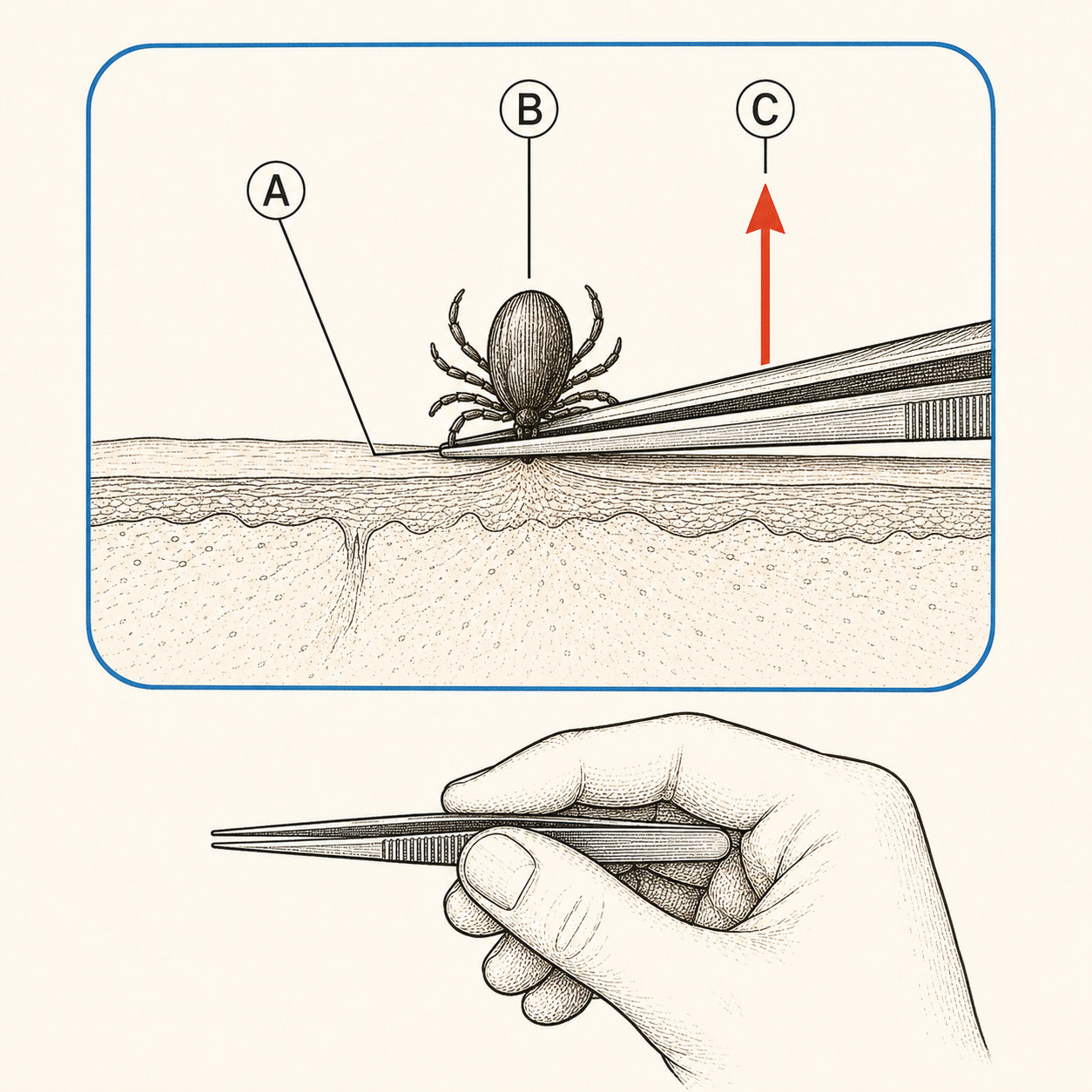
The procedure, which replaces every folk method:
- Fine-tipped tweezers (in the Chapter 47 kit for this reason), gripping the tick as close to the skin as possible, at the head, not the body.
- Pull straight up with slow, even pressure. No twisting, no jerking; the goal is intact removal.
- Clean the site and hands with alcohol or soap and water. A little skin welt is normal.
- Save the tick (zip bag or taped to paper, dated and located): identification helps any later medical call.
- Watch for 30 days: any expanding rash at the site (the bullseye is classic but absent in many cases), fever, aches, or fatigue means a prompt medical visit with the tick and the date in hand. In high-Lyme regions, a same-few-days call to a clinician about single-dose preventive treatment is standard practice for engorged blacklegged ticks.
What's banished, explicitly: matches, petroleum jelly, nail polish, dish soap tricks, and twisting gadgets used with twisting motions. All of them stress the tick (which can push infected material in) while wasting exactly the hours the tweezers use. If mouthparts break off despite good technique, they're skin splinters, not a disease reservoir: clean and let the body handle it.
Mosquito management beyond repellent
Repellent is the personal layer; camp tactics finish the job: site selection (breeze and distance from still water beat any spray; Chapter 30's elevated bench scores again, and the marsh-edge site with the view is a donation), timing (dawn and dusk are shift change; that's when sleeves come down and the kitchen moves briskly), head nets (an ounce, a few dollars, and the difference between misery and comedy in blackfly season: the northern June that Chapter 4 flagged), and screen discipline (the tent door zips behind every entry, immediately, a habit kids can own).
The spatial gadgets, graded honestly: the heat-diffused repellent-mat devices genuinely clear a calm-air patio zone and have earned their campsite following; foggers and yard sprays are collateral-damage machines with no place in wild settings; citronella remains ambiance. Standing-water policing around a campsite (the bucket, the kayak's bilge, the tarp's sag pockets) removes nurseries within your control, though the lake was always the main event.
Bites that got through get Chapter 48's simple treatment (cold, anti-itch, don't excavate), and the disease-watch note mirrors the tick one at lower intensity: unusual fever or symptoms after heavy mosquito exposure is worth a medical mention, region depending.
Poison ivy, oak, and sumac: identification first
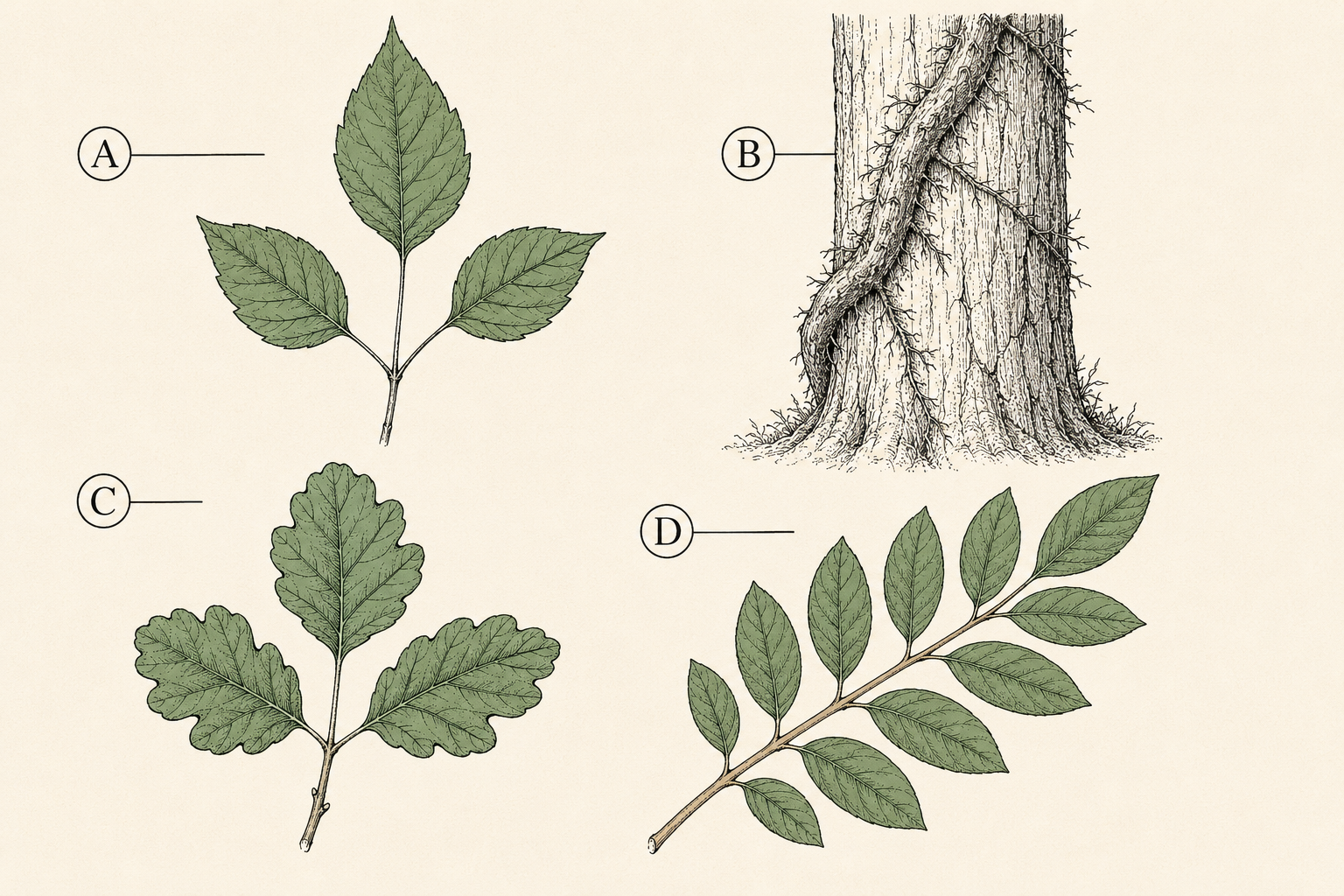
The trio, learned once: poison ivy ("leaflets three, let it be"): compound leaves of three leaflets, the middle one on a longer stalk, edges variable, glossy or dull, growing as ground plant, shrub, or the hairy-rope vine climbing trees ("hairy vine, no friend of mine") across most of the continent. Poison oak: also three leaflets, lobed like oak leaves, shrubby, the West Coast's specialist and the Southeast's understudy. Poison sumac: the outlier: 7–13 smooth-edged leaflets in pairs on red stems, a swamp shrub of the East and South, rarer and more potent.
The chemistry that runs every rule: urushiol, the oil in all three (leaves, stems, roots, year-round including bare winter twigs), causes the delayed allergic rash: hours to days later, which is why nobody connects Saturday's weeding to Tuesday's misery. The oil transfers by touch, by dog fur, by tool handles and bootlaces, and it persists on surfaces for months, which explains the classic mystery rashes (the dog that romped through it, the firewood gathered barehanded, the laces retied at lunch).
After contact: the wash window and the rash
Urushiol bonds to skin within roughly 10–30 minutes, so exposure response is a race: wash the area as soon as possible with soap and cool water (hot opens pores; scrub the way you'd remove axle grease, which is what the oil behaves like), or with a dedicated urushiol wash if the kit carries one; then wash under nails, and quarantine-launder the clothes, laces, and tool handles that touched it (the oil survives casual rinsing). A creek and camp soap at 200 feet (Chapter 35's law holds) beats waiting for camp.
The rash, once bloomed: it's an allergic response, not an infection, and it doesn't spread by scratching or blister fluid (delayed eruption in thicker skin creates that illusion; only leftover oil spreads it). Management: cool compresses, calamine or hydrocortisone, oral antihistamines for sleep more than itch, and patience across 1–3 weeks. Medical care enters for: rash on face, eyes, or genitals, widespread severe reactions, any breathing involvement (see the smoke warning), or signs of infection from scratching. Sensitivity varies wildly between people and can change over a lifetime; "I'm immune" is a hypothesis many former holders of it regret testing.
The prevention postscript: learn the plants at your home trails specifically (regional forms vary), teach kids the counting rhyme early, leash dogs through suspect stretches (fur is a delivery system, and the bath that follows is nobody's favorite), and give the trio the same respect at 8,000 feet in October, because leafless stems carry the same oil.
Stings, spiders, and the rest of the fine print
Bees, wasps, hornets: the camp rules are placement (check for ground nests and paper nests during Chapter 30's site read; a yellowjacket nest by the table is a move-sites event, not a coexistence project), scent and food discipline (open soda cans are wasp traps aimed at lips; pour into cups), and calm (swatting escalates; walking away works). Sting care and the anaphylaxis protocol live in Chapter 48, and anyone with a known allergy carries their epinephrine per Chapter 47, always, stated here because the fire ring is exactly where it gets forgotten.
Spiders, de-dramatized: meaningful North American concerns are the black widow (glossy black, red hourglass, in woodpiles, outhouses, and undisturbed corners) and the brown recluse (violin mark, the South and Midwest's closets and woodpiles); both bite defensively and rarely, and the camp countermeasure is one habit: shake out boots, shoes, and gloves that sat out overnight, and look before reaching into woodpiles and under things. Bites with spreading pain, cramping, or ulceration get medical care; everything else gets Chapter 48's clean-and-watch.
Scorpions preview Chapter 59 (the boot-shake rule doubles there), fire ants own the Southeast's picnic real estate (look down before you sit; treat stings like bee stings), and chiggers (the South's invisible itch merchants) answer to the same permethrin-and-shower system as ticks, with calamine for the misses. None of them changes a trip run on this chapter's routines.
Trailhead Takeaways
- Two layers: picaridin 20% (or DEET 20–30%) on skin, permethrin on clothing. Concentration buys hours, not power.
- Permethrin on fabric only, dried before wearing, deadly to ticks and toxic to wet-stage cats. Treat socks and pants especially.
- Tick country dress code: treated pants into treated socks. Full-body checks nightly; transmission needs 24–48 attached hours, and the check breaks the clock.
- Removal is tweezers at the skin, straight up, slow. Save the tick, date it, watch 30 days. Folklore methods help the tick.
- Leaflets three, let it be; hairy vine, no friend of mine; sumac runs 7–13 on red stems. All parts, all seasons.
- Wash within the 10–30 minute window, launder everything it touched, and never burn mystery brush: urushiol smoke is an emergency.
- Site breeze beats sprays; head nets win June; the tent door zips behind every entry.
- Shake out anything that slept outside before your hand or foot goes in.
Where Trips Go Sideways
- The 98% DEET badge of honor. Maximum formula for a weekend campground: melted sunglasses, oily misery, and the same protection 25% would have delivered with reapplication. Duration, not strength. Read the ratio.
- Permethrin on skin, repellent on pants. The system inverted: the insecticide degraded uselessly on arms while the skin lotion did nothing for the clothing ticks climb. Each layer has one address. Deliver correctly.
- The Sunday tick. Aboard since Friday's hike, found at the Monday shower, engorged: the 24–48 hour window fully spent. The nightly check costs four minutes and is the entire difference between nuisance and appointment.
- The match trick. Heat stressed the tick, the tick did what stressed ticks do, and the removal folklore accomplished its usual result. Tweezers were in the kit the whole time.
- Firewood with a vine attached. The hairy rope on the scavenged log went into the fire, and the smoke put two campers' airways in urgent care. Local bundles, bare hands off mystery brush, and the rhyme applies to wood too.
Frequently asked
Is DEET or picaridin better?
At camping concentrations (DEET 20–30%, picaridin 20%) they protect equally against mosquitoes and ticks. Picaridin wins the tiebreakers: no odor, no oil feel, no melted plastics, which is why it's the modern default. DEET's eight-decade record makes it never wrong. Either one pairs with permethrin clothing.
How toxic is picaridin to humans?
Its safety profile is strong: approved for children over 2 months and pregnant women when used as directed, decades of European use, and none of DEET's plastic-dissolving chemistry. As with any repellent: apply to exposed skin and clothing, skip broken skin, keep it out of eyes and small hands.
Do you have to wash off picaridin?
At day's end with soap and water is the sensible routine (same as sunscreen), and conveniently it's the same shower the tick check wants. There's no urgent-removal requirement; reapply per the label during the day (roughly every 4–6 hours of protection for 20% lotion) rather than washing between doses.
Why do people say not to use DEET?
Feel, folklore, and one genuine quirk: it's oily, it smells like the 1980s, it dissolves plastics (sunglasses, watch bands), and an old health scare stuck culturally despite decades of studies and surveillance supporting its safety as directed. Modern guidance keeps it on the recommended list; picaridin simply outcompetes it on comfort, which is the fair reason to switch and the only one the evidence supports.