Part II · Shelter and Sleep
Does a Tarp Go Under or Over a Tent?
Beyond the Tent
What shelter gear do you need besides a tent?
Two additions serve almost every camper: a ground cloth (footprint) under the tent and a rigged tarp over the kitchen. Two alternatives replace the tent for the right person: a hammock system in forested country, or a rooftop or truck-bed setup for road-based trips.
That's the whole cast. This chapter covers the two cheap add-ons first, because they upgrade any tent you already own, then the two alternatives, because each one wins outright in its niche and disappoints outside it. The recurring theme is honest niches: none of this gear is "better than a tent." It's better than a tent somewhere, and the somewhere is the entire decision.
A budget note up front: the add-ons cost almost nothing. A footprint is $8 of builder's tarp, and a serviceable 10×12 camp tarp with cordage runs a fraction of any tent's price. The alternatives run the other way, with rooftop tents costing more than excellent ground tents by multiples. Cheap upgrades first, expensive lifestyle changes later, and only when the niche is really yours.
The footprint: make it, don't buy it
A footprint is a ground cloth cut slightly smaller than your tent floor, and "slightly smaller" is the whole technology: an edge that peeks past the tent catches rain and funnels it underneath, turning floor protection into a bathtub for your bathtub. Cut it 2 inches inside the floor's outline all around and it protects without pooling.
Material barely matters. Builder's polyethylene tarp (the hardware-store 6-mil kind), Tyvek from a construction scrap, or polycryo window film for gram counters: all outperform their price. Trace the pitched tent's floor, cut inside the line, and you're done. The branded footprint's only real advantages are grommets that match your tent's pole tips and a stuff sack; whether those are worth several times the cost of the DIY version is a short conversation.
When do you want one at all? Gravel tent pads, slickrock, and stubbled dispersed ground: yes, it earns its ounces. Established grass or forest duff: your floor was fine anyway. The footprint also moonlights: it's a gear-staging surface during setup, a dry sit-pad at lunch, and the emergency layer under a leaky floor seam when Chapter 13's patch kit is at home.
The camp tarp: the best $40 in camping
A rigged tarp turns weather from a trip-ender into scenery: kitchen and table stay dry in rain, shaded in heat, and usable in everything short of a gale. One 10×12 tarp, 50 feet of cordage, and the skills in this section cover a family campsite; nothing else in this chapter pays off so fast.
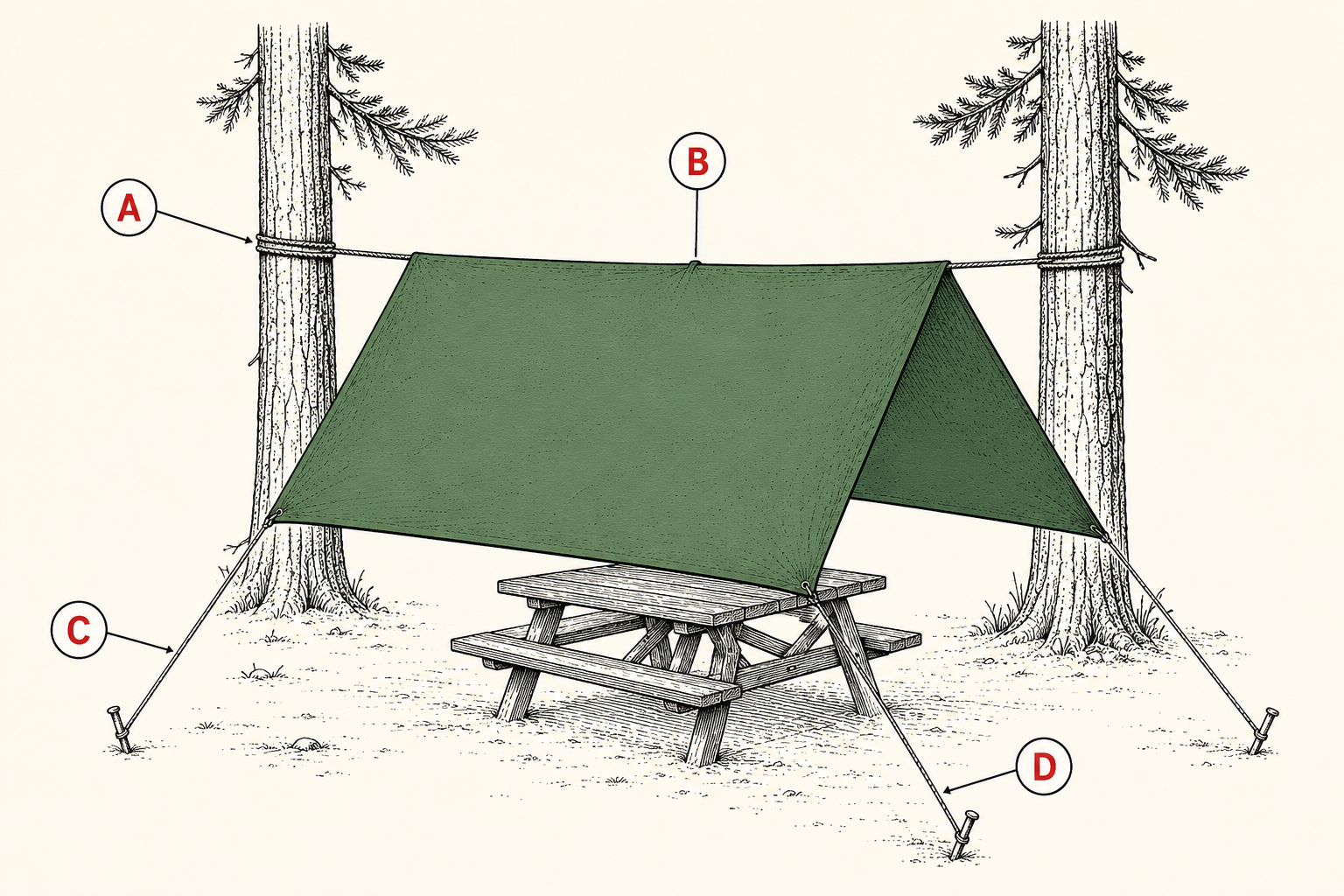
The standard rig is the ridgeline A-frame. Run a taut line between two trees (or two poles, or a tree and the roof rack) at about head height, drape the tarp over it, and stake the corners out and down at 45 degrees. That's it. The geometry sheds rain both ways, the low sides block wind, and the whole thing goes up in ten minutes with the two knots you'll meet properly in Chapter 34 (a bowline on the first tree, a trucker's hitch for tension on the second, taut-line hitches on the corners if you skip the hardware).
Wind is the tarp's enemy and pitch angle is the answer: the steeper and lower the tarp, the more it survives. A flat, high "dining canopy" pitch catches gusts like a sail and converts stakes into projectiles; in anything past a breeze, drop one entire side to the ground (the lean-to pitch) and aim the low edge at the wind. And rig a drip point: tie a short cord tail at the ridgeline's low spot so rain runs off one predictable corner instead of curling under to drip on the stove.
Guylines and tensioners: tautness on demand
Every tarp and tent line wants the same two properties: adjustable tension and a release that works when wet. You get them from either a taut-line hitch (free, Chapter 34) or a mechanical tensioner (cheap plastic or aluminum cleats that grip the line), and carrying a dozen tensioners is nobody's failure.
The honest comparison: the knot never breaks, never gets lost, and works on any line diameter; the hardware is faster, one-handed, and idiot-proof at 6 a.m. in gloves. Plenty of skilled campers run hardware on everything and save the knot for when a tensioner cracks. Learn the knot anyway (it's twenty minutes of practice, total), then buy the tensioners without guilt.
Two line details that outrank the tensioner debate. First, use reflective guyline: the woven-in tracer thread turns headlamp light into a laser grid and cuts nighttime guyline trips (the literal kind) to nearly zero. Second, pre-rig: leave guylines permanently attached to tarp and tent with the tensioner on, coiled with a quick wrap. Rigging from scratch every trip is how the ten-minute tarp becomes a thirty-minute argument.
Hammock camping: the forest's best bed
A camping hammock system (hammock, tree straps, bug net, rain tarp, and under-insulation) replaces the tent entirely in forested country, and converts claim the best sleep outdoors. The system works when you respect its two laws: hang at the right geometry, and insulate underneath.
Geometry first. Hang the straps at about a 30-degree angle from horizontal, with the hammock's low point around 18 inches off the ground (chair height). Strap angle is the counterintuitive one: beginners crank the hammock banjo-tight and flat, which triples the load on straps and trees and turns the bed into a taco. A 30-degree sag lets you lie diagonally across the centerline, which is the actual trick of hammock comfort: diagonal is flat. Use tree straps at least 1 inch wide (webbing, never rope, which cuts bark), around trunks thick enough not to sway, checked for dead limbs overhead before anything gets clipped.
Insulation is the law that ambushes people. Compressed insulation does nothing (Chapter 9's loft physics), and a hammock compresses your entire underside while exposing it to moving air; a 65°F evening becomes a cold night by 2 a.m., a phenomenon hammock campers call "cold butt syndrome" without any affection. The fixes: a foam or inflatable pad inside the hammock (cheap, slides around, works), or an underquilt slung beneath it (dearer, luxurious, the converts' choice). Below roughly 65°F overnight, under-insulation is mandatory, and yes, that means most nights.
Rooftop tents: the honest math
A rooftop tent (RTT) is a fold-out bedroom on your roof rack: a real mattress that stays made, a two-minute pitch, and independence from ground conditions. It's also a four-figure purchase that lives on your vehicle, taxes your fuel, and takes your bedroom with you every time you drive to the trailhead. Both halves are true, so the decision is arithmetic, not vibes.
The RTT wins when trips look like touring: new site every night, quick setups, rough or rocky ground, mud season, places where flat tent real estate is scarce. Fold, drive, unfold, sleep. It loses when trips look like basecamping: park three days at a campground, day-trip in the car, return. Every errand requires stowing the bedroom (ladder up, bedding shuffled, latches). Count your last five trips: mostly touring, the RTT earns a look; mostly basecamp, a great ground tent plus a cot costs a fifth as much and camps better.
The unglamorous details that the photos skip: your rack must be rated for the tent's weight (both static and dynamic ratings; check the vehicle's roof limit as well as the rack's), fuel economy drops noticeably with a permanent roof box in the wind, garage clearance becomes a thing you know to the inch, and the ladder at 3 a.m. in rain is exactly as fun as it sounds.
Truck-bed camping: the pickup's cheat code
A pickup with a shell or canopy is already 80% of a camper: flat, dry, off the ground, bug-free with a screen, and pre-paid. A sleeping platform (plywood over storage bins), a good pad, and window screens finish the job for a weekend's work and modest money.
The platform build is the whole project and it's beginner carpentry: a plywood deck at wheel-well height, bins or drawers rolling underneath, pad and bedding on top. Height matters; leave yourself sitting headroom under the shell, which usually means resisting the urge to build the deck high for deeper storage. Ventilation matters more: two opposing screened windows (or a screened tailgate panel) keep condensation from raining off the shell's ceiling by morning, the standard first-night surprise.
No pickup? The same idea scales down to SUVs and hatchbacks with the seats folded: a sleeping platform, window screens, and a level parking spot make a capable weather-proof bedroom for two. Half the "vanlife" fleet is a Corolla with good curtains and better attitude.
Matching shelter to trip: the decision in one pass
Run the niche test: forested routes with distant water and lumpy ground favor the hammock; touring road trips with nightly moves favor the rooftop or truck bed; basecamp weekends and families favor the ground tent, upgraded with footprint and tarp. When two options tie, the ground tent wins on cost and flexibility.
Notice what the test doesn't ask: which option is coolest at the trailhead. Shelter is infrastructure. The tarp-and-footprint upgrades apply to every answer, travel to every trip, and cost less than a tank of gas, which is why this chapter put them first and why they're the only universal recommendation in it.
Trailhead Takeaways
- Footprint: cut it yourself, 2 inches smaller than the floor all around. Bigger-than-floor is a rain funnel.
- The 10×12 tarp over the kitchen is camping's best money. A-frame on a ridgeline, corners at 45 degrees, steep and low when wind rises.
- Reflective guylines, pre-rigged with tensioners, end a whole category of campsite annoyance.
- Hammocks: straps at 30 degrees, seat at 18 inches, lie diagonal, and insulate underneath below 65°F. Wide straps, living trees, look up.
- Rooftop tents win touring, lose basecamping. Count your last five trips before spending.
- A truck shell plus platform is a camper at hatchback prices. Ventilate or it rains indoors.
- Nothing here beats a tent everywhere. Everything here beats a tent somewhere.
Where Trips Go Sideways
- The oversized footprint. The tarp edge sticking out "for extra protection" collected the night's rain and delivered it under the floor, and the tent woke up on a water bed. Smaller than the floor. That's the entire spec.
- The dining-fly sail. A flat tarp pitched high and proud on aluminum poles met a 25 mph gust and left, taking two stakes on tour. Steep, low, and nose to the wind, or down it comes before dinner.
- The flat, tight hammock. Strung like a guitar string for "support," it delivered a taco bed, alarming strap loads, and a 3 a.m. surrender to the car's back seat. Sag to 30 degrees, lie diagonal, and it's a bed.
- The uninsulated hang. Gorgeous 70°F evening, 52°F dawn, and the sleeping bag's underside compressed to nothing in moving air. Cold found the whole backside at once. Pad or underquilt, most nights, no exceptions.
- Buying the rooftop tent for basecamp weekends. Every coffee run required folding the bedroom. By August it was for sale, lightly used, real money lost. The niche test is five minutes; run it before the purchase, not after.
Frequently asked
Does a tarp go under or over the tent?
Both jobs exist. Under: the footprint, cut smaller than the floor, protecting fabric from abrasion. Over: the camp tarp, rigged above the kitchen or as storm reinforcement. If you own exactly one tarp, rig it overhead; the kitchen needs it more.
Can you hammock camp without trees?
Yes, with a hammock stand or improvised anchors (vehicles, boulders, posts), but at that point the hammock is competing with a tent it no longer beats. Hammock systems earn their keep where anchors grow naturally. Treeless terrain (desert, alpine, prairie) is ground-shelter country, and Chapter 59 camps it accordingly.
Are rooftop tents worth it?
For touring trips with nightly moves, rough ground, and quick setups, often yes. For basecamp camping where the vehicle runs errands, usually no, because the bedroom leaves with the car. Do the count on your actual trips, check your roof's weight rating, and price a premium ground tent plus cot as the honest comparison.
What size tarp is best for camping?
A 10×12 foot rectangle is the do-everything answer for a family site: big enough to cover a picnic table with rain overhang on every side, small enough to rig drum-tight in wind with ordinary stakes. Solo and backpacking setups do fine at 8×10. Bigger than 12×14 stops being shelter and starts being a sailing lesson, and wind grades that exam hard.